
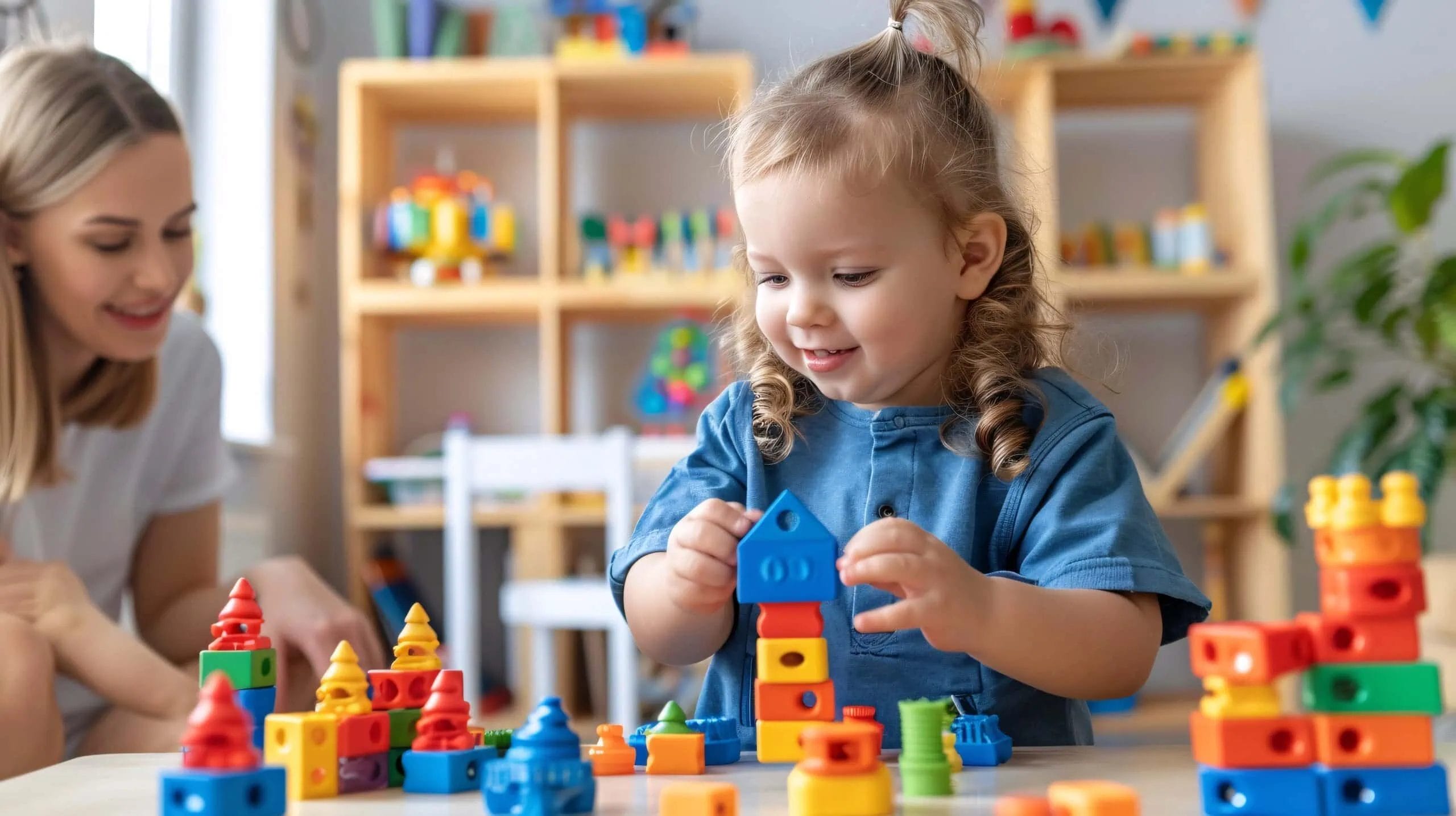
Making Daily Life Easier & School Ready
Best Occupational Therapy
Help your child with handwriting, fine motor skills, sensory challenges, sitting tolerance, and everyday independence. Our US‑standard OT uses play-based methods that feel fun, not like therapy.
- Personalized Goals
- American University Model
- School Readiness Program
- Affordable, Non-Profit






What is OT & Why It Matters
Occupational Therapy (OT)
Occupational therapy helps children do the things they need and want to do—at school, at home, and at play. It builds strength, coordination, sensory skills, and independence so your child can manage their day without constant help.
- School readiness: A child who can sit, focus, hold a pencil, and manage materials is ready to learn.
- Independence: Self-care skills (dressing, eating, toileting) reduce stress at home and build confidence.
- Sensory comfort: Help with sensory sensitivities means your child can enjoy school, sports, and social events without distress.
- Peer interactions: Better motor skills and body awareness mean more confident play and friendships.

OT Key Points
RASYA's OT Process
Our Occupational Therapy (OT) Components
Our OT is designed to help all children that require additional help to prgress in school and life.
Our OT Assessment Process
Before therapy starts, we assess your child’s strengths and challenges across motor, sensory, and self-care areas. This guides us in making a personalized plan.Children learn in a school-like routine, with a mix of academics, play, and therapies built into the day.
What happens
- Initial meeting: We talk with you about your concerns and what matters most (e.g., writing, dressing, sitting in class).
- Observation & play: Our therapist watches your child play and interact to understand natural strengths and struggles.
- Formal or informal testing: We may use standardized tools or simple activities to assess fine motor, gross motor, sensory, and self-care skills.
- Written summary: You get a clear report on what your child can do, what is hard, and where to focus.
- Goal-setting meeting: Together, we decide on 3–5 realistic goals for the next 3 months.

How We Do OT – Our Approach
We use play-based, hands-on methods that feel fun. Therapy happens in a safe, sensory-friendly space with materials that match your child’s level and interests.
Our methods
- Play-based therapy: Learning through games, crafts, building, and movement—not drills.
- Sensory-motor integration: Activities that help the brain and body work together smoothly.
- Scaffolding: Starting easy and gradually building challenge as your child gains confidence.
- Functional goals: Every activity connects to real school or home needs (e.g., "hold pencil to write your name").
- Child-led choice: Your child picks from suggested activities, so they stay engaged and motivated.
- Positive reinforcement: We celebrate effort and small wins to build confidence.
Therapy Schedule & Duration
Frequency Guidance
- Mild concerns: 3 sessions/week, 8–12 weeks for children trouble with pencil grip, slight clumsiness
- Moderate challenges: 3-5 sessions/week, 12–20 weeks for children trouble with weak hand strength, sensory sensitivity
- More complex needs: 5 sessions/week, ongoing with regular reviews for children trouble with coordination + sensory + self-care
We review progress every 4–6 weeks and adjust the plan as needed.
Integration with Speech, Autism, & Other Services
If your child needs OT and speech or autism therapy, our therapists work together on one shared plan. This avoids confusion and speeds up progress.
How integration works
- Unified goals: If your child has a speech goal (e.g., "clear /s/ sound"), OT might build mouth strength and motor control to support it.
- Shared observation: Therapists from different areas coordinate notes and strategies.
- Efficient scheduling: Sessions can be on the same day or combined into a "multi-therapy" session where needed.
- One parent plan: You get one monthly summary, not separate updates from each therapist.
Parent Involvement & Home Activities
Parents are the key to long-term change. We teach you simple, fun strategies to practice at home every day.
How we support parents
- Bi-weekly or weekly check-ins: Quick updates on progress and what to focus on next.
- Home activity sheets: Simple, 5–10 minute activities you can do during meals, play, or daily routines.
- Demonstration sessions: We show you how to help (e.g., how to guide pencil grip, how to make sensory activities fun).
- Video clips or diary notes: Weekly written updates so you know exactly what happened in therapy.
- Monthly parent review: Formal meeting to discuss progress, celebrate wins, and adjust goals.
Outcomes You Can Expect
Most families see practical, noticeable changes in their child’s daily skills within 3–6 months. We track progress in ways you can easily understand and measure at home.
Common outcomes
- Clearer handwriting and improved ability to copy from the board
- Better sitting tolerance in class and ability to focus longer
- Increased independence in dressing, feeding, and self-care
- Improved confidence in sports, play, and group activities
- Increased confidence to join or continue in regular school with support
- Reduced sensory distress (e.g., can now wear socks, enjoy textures, tolerate sounds better)
- Stronger hand strength for using scissors, opening containers, and managing school materials
- Better body awareness & coordination leading to fewer falls or accidents

Ready to get started with OT?
Check if our Occupational Therapy is right for your child?
Schedule a visist and detailed assessment.


Meet our Team from OT Department
The Experts Behind Your Success
At RASYA, your care is led by RCI-certified professionals trained under strict US-based clinical protocols. Guided by Dr. Yugandhar Ramakrishna, AuD, PhD, CCC-A (USA) and Dr. Tejaswini Boreddy, MASLP, AuD (USA)our specialists combine global expertise with deep personal dedication to ensure every developmental milestone is met with precision and empathy.
Frequently Asked Questions
OT focuses on fine motor skills, self-care, sensory processing, and school/play readiness. PT focuses more on big muscle movement and mobility. Many children benefit from both.
No, but OT often helps children with related challenges (e.g., hand strength for writing, sensory sensitivity, sitting tolerance). We recommend an OT assessment so you can decide.
Some skills improve naturally with time and practice. However, targeted OT speeds up progress and prevents habits (like poor pencil grip) from becoming harder to change later.
It depends on the goals and starting level. Some children need 3–6 months, others 6–12 months or longer. We review every 4–6 weeks and adjust.
We adjust activities to match your child’s interests and energy. If a child is consistently reluctant, we discuss with parents whether the goals, frequency, or approach need to change.
OT can help build sitting tolerance, body awareness, and focus through movement and sensory activities. It is often paired with other support (like behavioral strategies or medical advice).
If your child struggles with writing, handwriting, self-care, balance, sensory sensitivities, or sitting still in class, an OT assessment is a good first step. We can tell you if OT will help.
In-person OT is most effective because it involves hands-on activities and physical guidance. Some parent coaching or check-ins can be done online if needed.
Keep it simple: “You’re going to play and do fun activities that help your hand/body get stronger.” Most children are excited to come back after the first session.
We schedule flexibly. Most children do 3-5 sessions per week, which can fit around school hours. Many families combine OT with other therapies on the same days.
ou’ll have regular check-ins (weekly or biweekly) by phone, WhatsApp, or in person. We also send written updates or home activity sheets. Any urgent concerns can be shared anytime.
OT is very helpful for children with physical or developmental disabilities. We assess your child’s unique needs and design a plan to build the skills that matter most to your family and school.