
In countries that follow international best practices, the story of a child born with hearing loss often has a triumphant middle and end. We see these children grow up to be successful doctors, engineers, and leaders, speaking so naturally that you would never even know they were once unable to hear. They reach these high positions because their journey was guided by a system designed for excellence.
However, in India, we often see a different, more heartbreaking reality. We see children who have undergone the exact same surgery, sometimes with the most expensive implants available, yet they still struggle to speak clearly years later. Many never reach their full potential.
Why is there such a massive gap in results? The secret isn’t just the surgery; it’s the system.
At the RASYA American Institute, we utilize a 7-step International Protocol based on the highest global standards. If you are a parent searching for the best Cochlear Implant hospital, you must look beyond the operation theater. You must understand that surgery is only 20% of the journey. The other 80% happens before the surgeon picks up the scalpel and long after the stitches have healed.
This is your comprehensive guide to the 7 crucial steps that turn a medical procedure into a life-changing success.
Step 1: Beyond the BERA – Demand a Correct Diagnosis
The first step in finding the right hospital is looking at their diagnostic lab. Our first step isn’t just about “can the child hear?”—it’s about understanding the problem with total precision.
One thing we must always remember is that children cannot tell us if they are hearing sounds the way adults can. Not only that, but everyone hears sounds differently. For example, take the word ‘Basara.’ For a child with certain types of hearing loss, it might sound like ‘Bara’ or just ‘Ba…’ The sound is reaching them, but there is no clarity.
Tests are easy for adults because we can give feedback. But for children, relying only on a basic BERA report is incredibly dangerous. We have seen cases where a child was diagnosed with ‘profound hearing loss’ and operated on, only to find out later they just had earwax or a simple infection. To prevent these life-altering mistakes, the best hospitals must provide a full diagnostic battery:
- Wideband Tympanometry: This is a specialized test. A normal test works for adults, but a child’s ear anatomy is completely different. This test tells us clearly if there is earwax in the outer ear or an infection in the middle ear.
- OAEs (Otoacoustic Emissions): This test tells us if the tiny sensors inside the inner ear are actually working. If these sensors are healthy, a Cochlear Implant may not even be necessary.
- BERA (Brainstem Auditory Evoked Response): This stimulates hearing and shows us how the hearing nerves respond to sound. This is vital for understanding how the nerves are functioning.
- ASSR (Auditory Steady-State Response): This is the “Frequency Map.” It shows us exactly what the child hears at every pitch—low, middle, and high. It removes all the guesswork and acts as the backbone for selecting exactly which device fits your child’s needs.
The Lesson for Parents: Never consider a cochlear implant without these four tests, especially if your child has profound hearing loss. Once we have this perfect map of your child’s hearing, we must not delay.
Step 2: Preventing ‘Brain Kabja’ (Cortical Remapping) for best Cochlear Implant use
When parents realize that their child can hear again through a cochlear implant, they feel a surge of hope. However, many are forced into a waiting period—waiting for government schemes, insurance approvals, or hospital slots. It is common to think that a few weeks or months won’t matter.
In reality, those months are everything. In a child’s brain development, the first three years (36 months) are the ‘Golden Period.’During this time, the brain is like a wet sponge, learning new sounds incredibly fast. Once that time passes, we can never get it back.
The Problem of Nerve Decay
Think of a broken arm in a cast. If you don’t move the muscles for weeks, they become weak and thin, similar to how a cochlear implant requires consistent rehabilitation for optimal function. The same thing happens to the hearing nerve. If it hasn’t heard anything since birth, and then sits idle for several more months while waiting for surgery, the Auditory Nerve can become completely non-functional and decay further.
What is ‘Brain Kabja’?
Because of the lack of hearing, a process called ‘Cortical Remapping’ happens in the brain. Our brain lives by one rule: ‘Use it or Lose it.’ If a part of the brain is not being used, its power is diverted elsewhere.
I call this ‘Brain Kabja’ (Brain Occupation). In the world of real estate, if a plot of land is left empty and neglected, someone else might come and occupy it. Your child’s brain does the same. If the hearing center is left empty, other senses like sight or touch will move in and occupy that space. Once this ‘Kabja’ happens, no matter how expensive the surgery is later, the results will be limited because the “room” for sound in the brain is gone.
The Solution: A comprehensive approach involving an ENT specialist and rehabilitation services can significantly enhance outcomes. Best-practice hospitals will provide low-cost rental hearing aids and early therapy from day one. This keeps the hearing nerve active and stimulates the language center while you wait for the operation.
Step 3: Choosing the Right Cochlear Implant Technology for a 60-Year Life
The biggest mistake parents make is choosing a device based solely on today’s budget. You must remember that you are choosing your child’s ears for the next sixty years of their life. Their journey doesn’t end with learning to say “Amma”; it starts there and goes through school, college, and a professional career.
The Bimodal Cochlear Implant vs. Bilateral Cochlear Implant Choice
Sometimes, financial or administrative hurdles mean you can only start with one implant. In this case, you must follow the Bimodal Approach. This means putting a matching hearing aid on the second ear. We don’t do this just for hearing; we do it to keep the nerve and the brain on that side ‘active’ so a second implant remains an option in the future.
However, the Bilateral Approach (implants for both ears) is the international gold standard for several reasons:
- Directional Hearing: The child can tell where a sound is coming from, which is a vital safety skill (like hearing a car approaching).
- Clarity in Noise: It allows the child to filter out the noise of other children to hear the teacher’s voice.
- Balanced Brain Development: Research shows that children with bilateral implants develop language faster and more clearly because the brain receives equal signals from both sides.
Step 4: The 80/20 Rule – Finding the Right Team
When parents find out their child needs an implant, they usually search for the “best surgeon.” While a great surgeon is important, focusing only on the surgery is a mistake.
We often see children with the most expensive implants and famous surgeons who still struggle to speak. Meanwhile, children with mid-range implants and a great team are thriving. This is the ’80/20 Rule’Surgery is only 20% of the success—it’s just fitting the engine; the real work begins with rehabilitation. The other 80% is the team that teaches the child how to drive.
Your Four-Person Success Team:
- The Surgeon: To place the device perfectly. Remember, this isn’t brain surgery; it’s a safe procedure on the ear bone performed by experts in the ENT department.
- The Audiologist: They check the electrodes during surgery using NRT and SmartNav technology and handle the critical “Mapping” afterward.
- The AVT Specialist: These are the ‘Language Architects’ who turn noise into words.
- The Parent: You are the most important player. You are with the child every day, turning every sound into a learning moment, especially crucial after cochlear implant surgeries.
Step 5: Precision Cochlear Implant Mapping with e-ABR (No More Guessing)
After surgery, the device must be “mapped” or tuned to fit your child’s hearing level. This is the ‘software’ that makes the ‘hardware’ work, much like how the cochlea processes sound signals.
Here is the challenge: small children cannot tell us if a sound is too soft or so loud that it hurts. Because they can’t speak yet, many hospitals use “Guess Mapping” based on an estimate. This is incredibly dangerous. If the mapping is wrong and the sound is too low, the child hears noise but doesn’t understand words. Their speech development will simply stop.
The Game Changer: e-ABR
The best hospitals use e-ABR testing (Electrically Evoked Auditory Brainstem Response). This test shows us exactly if the signal from the implant is reaching the brain. The child doesn’t have to say a word; their brain gives us the response. This is the standard in countries with the highest success rates, and it ensures your child gets perfect hearing without the struggle of the “Guessing Game.”
Step 6: Auditory Verbal Therapy (The ‘Korean Movie’ Gap)
Many parents expect magic—that the child will speak the moment the device is switched on, but Auditory Verbal Therapy (AVT) rehabilitation is key. But hearing is not the same as understanding.
I call this the ‘Korean Movie Gap.’ Imagine watching a foreign film without subtitles. You hear the actors talking, but you don’t understand the language because it isn’t registered in your brain yet. Your child on day one is exactly like that. AVT (Auditory Verbal Therapy) is the “subtitles” that teach the brain what the sounds mean.
The RASYA Success Roadmap (3 Stages):
- Level 1 (The Quiet Room): Learning to identify sounds with zero distraction.
- Level 2 (The Home Setup): Learning to focus on words even when a fan or TV is running.
- Level 3 (The Restaurant Test): The ultimate goal—learning to hear one person’s voice in a noisy birthday party or a busy classroom. This is the “superpower” that allows them to live a normal life.
Step 7: The School Readiness Program (The Grand Finale)
The final hurdle is the transition to a regular school. There is often a gap between a child’s ‘Chronological Age’ (how old they are) and their ‘Hearing Age’ (how long they have been hearing). A five-year-old who has only been hearing for six months has a hearing age of an infant.
In the first three years, the brain has ‘Brain Plasticity’—it is incredibly flexible. The faster we fill the age gap while this plasticity is active, the better the child will do.
Why a School Simulation is Vital
Home is peaceful, but school is chaotic. Many children from nuclear families struggle because they haven’t had enough social stimulation. A School Readiness Program (SRP) creates a “mini-school” environment to teach:
- Sitting Tolerance: Learning to sit patiently and focus.
- Listening in Noise: Training the brain to find the teacher’s voice in a noisy room.
- Social Skills: Learning to mingle and follow instructions from an authority figure.
- Academics & Confidence: Learning rhymes and math so they feel brave and equal to their peers on the first day of regular school.
Conclusion: Your Decision is Their Future
I want to leave you with a story of a girl I met while studying at a top university abroad, who had undergone cochlear implant surgery and thrived. She was born completely deaf, but today, she is a proud medical student at that same university. She didn’t reach that goal through surgery alone. She reached it because her parents followed this 7-step protocol to the letter.
Your child has that same potential. Today, you aren’t just paying for a medical procedure; you are laying the foundation for your child’s entire life, especially with a state-of-the-art cochlear implant.
The Parent’s Checklist for the Best Hospital:
Before you choose a center, ask these three questions:
- Do you perform ASSR and e-ABR to ensure precision?
- Do you have a dedicated AVT team that follows a structured roadmap?
- Do you offer a School Readiness Program to prepare them for the real world?
If the answer is ‘Yes,’ you are on the right path. Do not waste the ‘Golden Window.’ Every day is a treasure. I want you to have that beautiful moment where your child looks at you and says ‘Amma’ for the very first time.
At the RASYA American Institute, we are here to walk this path with you. Your decision today is their future tomorrow.
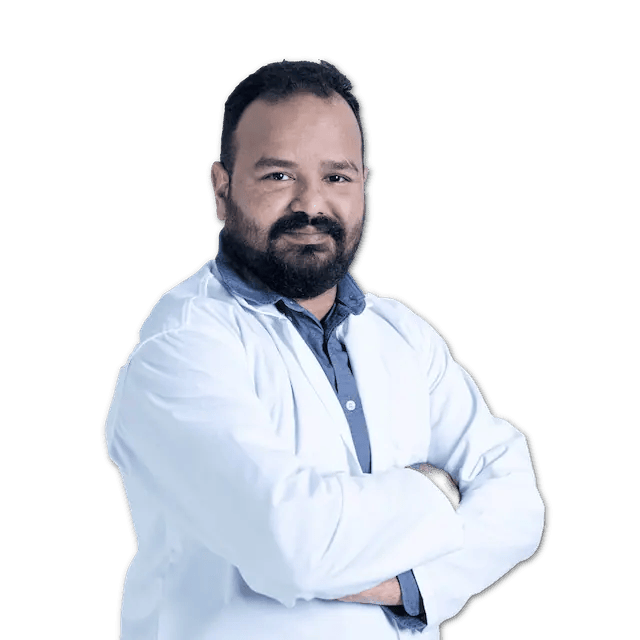
Author:
Dr. Yugandhar Ramakrishna, AuD (USA), PhD (USA),
Founder RASYA American Speech, Hearing & Vertigo Institute
Neuroscientist, Doctor of Audiology
Former Professor, Director of Hearing & Balance Center
California State University